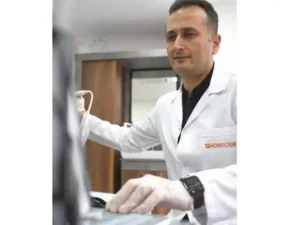
"The source of pseudo-sciatica or low back pain that radiates to your waist and hips may be the sacroiliac joint." warned Romatem Ankara Medical Director Prof. Dr. Alper Murat Ulaşlı and pointed out that this may be confused with sciatica pain or herniated disc. M A G health and beauty İPFİOF DF1 ALPER MUFUYf üfrfeL l 4 v What is sacroiliac joint pain? At the lower end of our spine, in the area we call the "sacroiliac joint", which is surrounded by strong ligaments connecting the sacrum bone and our pelvic bones, i.e. the pelvis, there may be intense and persistent pain in the lower back and hips.
Pain in this joint often radiates to the lower back and buttocks and can be confused with herniated disc pain. What causes sacroiliac joint pain? Falls, injuries, accidents and fractures, leg length inequality, pregnancy and childbirth, prolonged sitting or standing, spinal curvatures such as scoliosis, gait and posture disorders that cause uneven load distribution on the joint, contact sports, Activities that cause stress on the joint, such as heavy lifting or work that requires strength, rheumatic diseases such as ankylosing spondylitis involving the sacroiliac joint, calcification caused by wear of the articular cartilage, rapid weight gain, obesity, previous hip or spine surgeries can cause these pains. What are the symptoms? If your pain increases when you sit or stand for long periods of time during the day, climb stairs, travel for long periods of time or cross your legs, the "sacroiliac joint" may be the source.
It Could Be Pseudo-Sciatica (Mag Magazine)
We estimate that fifteen to thirty percent of people with low back pain are associated with the sacroiliac joint. If the sacroiliac joint pain is accompanied by spasm of the priformis muscle in the buttocks, which in some patients is attached to this joint, pain along the sciatic nerve from the buttocks to the calves can intensify. This condition is also called pseudo-sciatica. This condition is very similar to a herniated disc and can therefore be confused. Which specialist should be consulted for this kind of pain? If you have this kind of pain, we recommend that you consult a physical medicine and rehabilitation specialist. We will determine the source of your pain with a comprehensive history, physical examination and imaging methods when necessary.
If the pain persists or increases even when lying down and resting, the source of the pain may be rheumatic or a more rare disease. Therefore, it is important for your health to consult a specialist. What is the treatment for sacroiliac joint pain? In the treatment of sacroiliac joint pain, if the source of pain is mechanical, we first examine posture and sitting posture. We prescribe a patient-specific exercise prescription. Physical therapy agents, manual methods can relieve pain, as well as injections into the joint and / or priformis muscle under imaging guidance when necessary, are among the methods we use in the treatment of these pains.